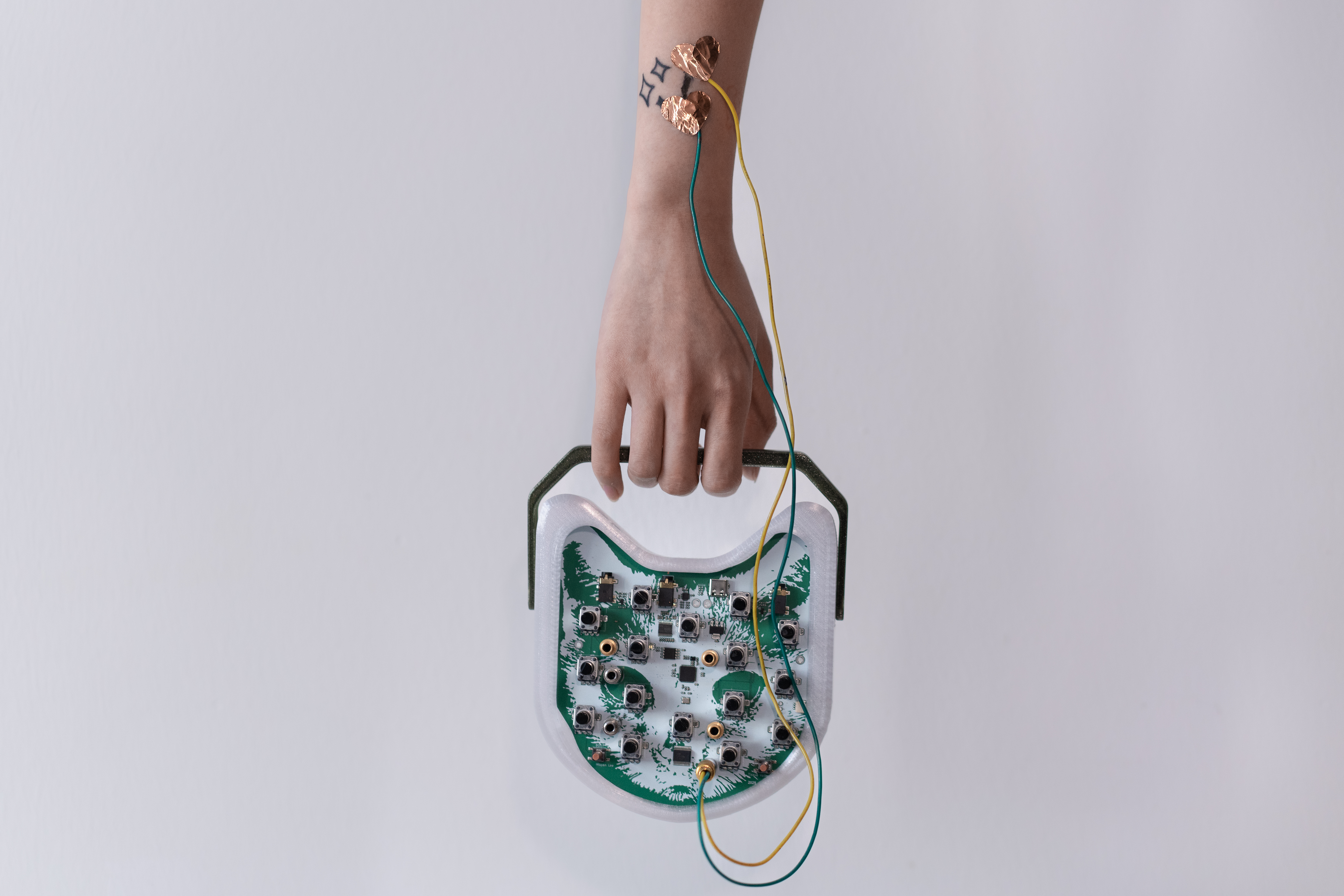
Tissue Voltage is an audio synthesizer that integrates the body directly into its interface. The audience’s touches, pinches, and presses intervene in the electrical circuit, disturbing voltage paths and modifying control signals — pitch, tempo, filter — that shape the sound in real time.
The instrument can be manipulated in two ways: by turning its knobs, or by inserting mini jacks into the available ports. Any conductive connection completes the circuit — whether both ends of a mini jack are inserted and in contact, connected by a conductive ink path, or bridged through the same conductive material. This openness of interface makes the body itself a variable component in the signal chain.
Built around the RP2350 chip, Tissue Voltage is a standalone synthesizer driven by a microcontroller-based digital sound engine. It generates audio through real-time synthesis algorithms — digital oscillators, filters, and amplifiers — while simultaneously sampling the fluctuating voltages produced by human contact. Skin resistance and physical tension become variations in the sound, turning the body’s electrical properties into musical material.
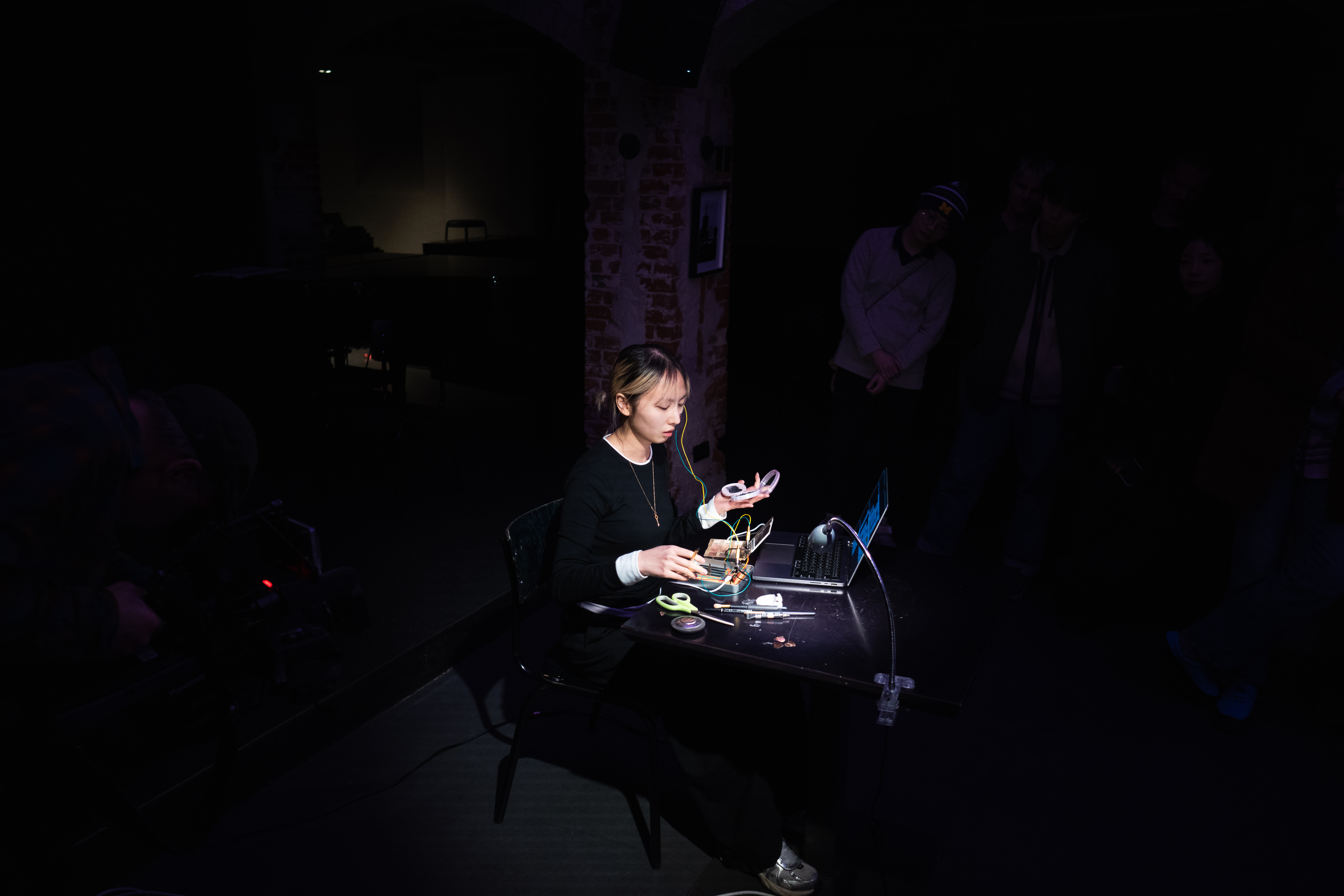
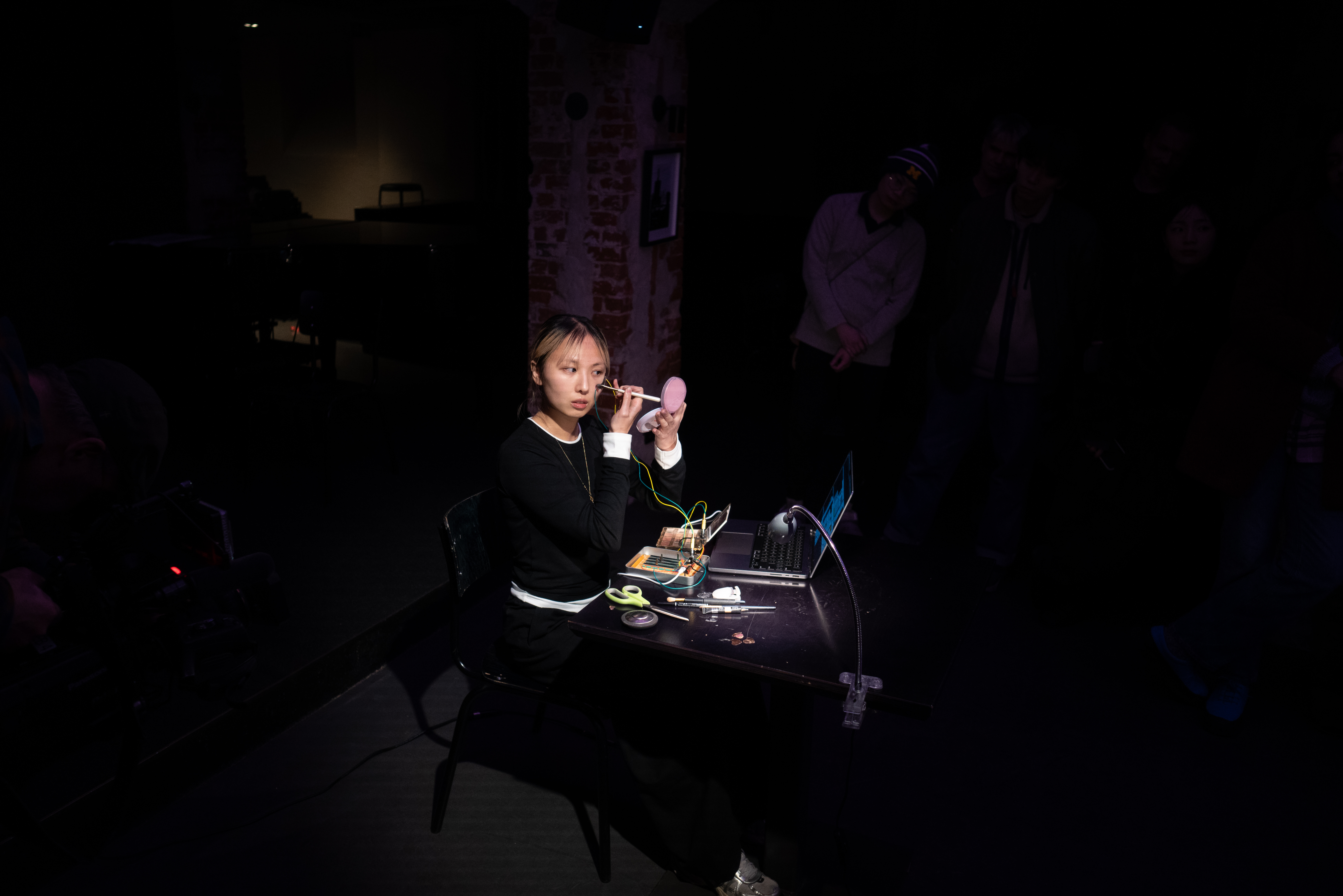
The work embraces a playful performativity: the performer must remain in contact with the device, held in a state of constraint — a temporary cybernetic coupling between body and instrument.
At the same time, Tissue Voltage is an investigation into the nature of the circuit itself: uncertain, unstable, and fragile. This stands in deliberate contradiction to the traditional engineering principle of prioritising efficiency and stability. The instrument’s firmware — embedded C++ built on the Pico SDK — provides low-level hardware access across GPIO, ADC, PWM, and timers, but the logic it serves is one of controlled precariousness rather than clean signal paths.
Feature
“Haut kann klingen? Studentin zeigt ihr Kunstprojekt” — Buten un Binnen